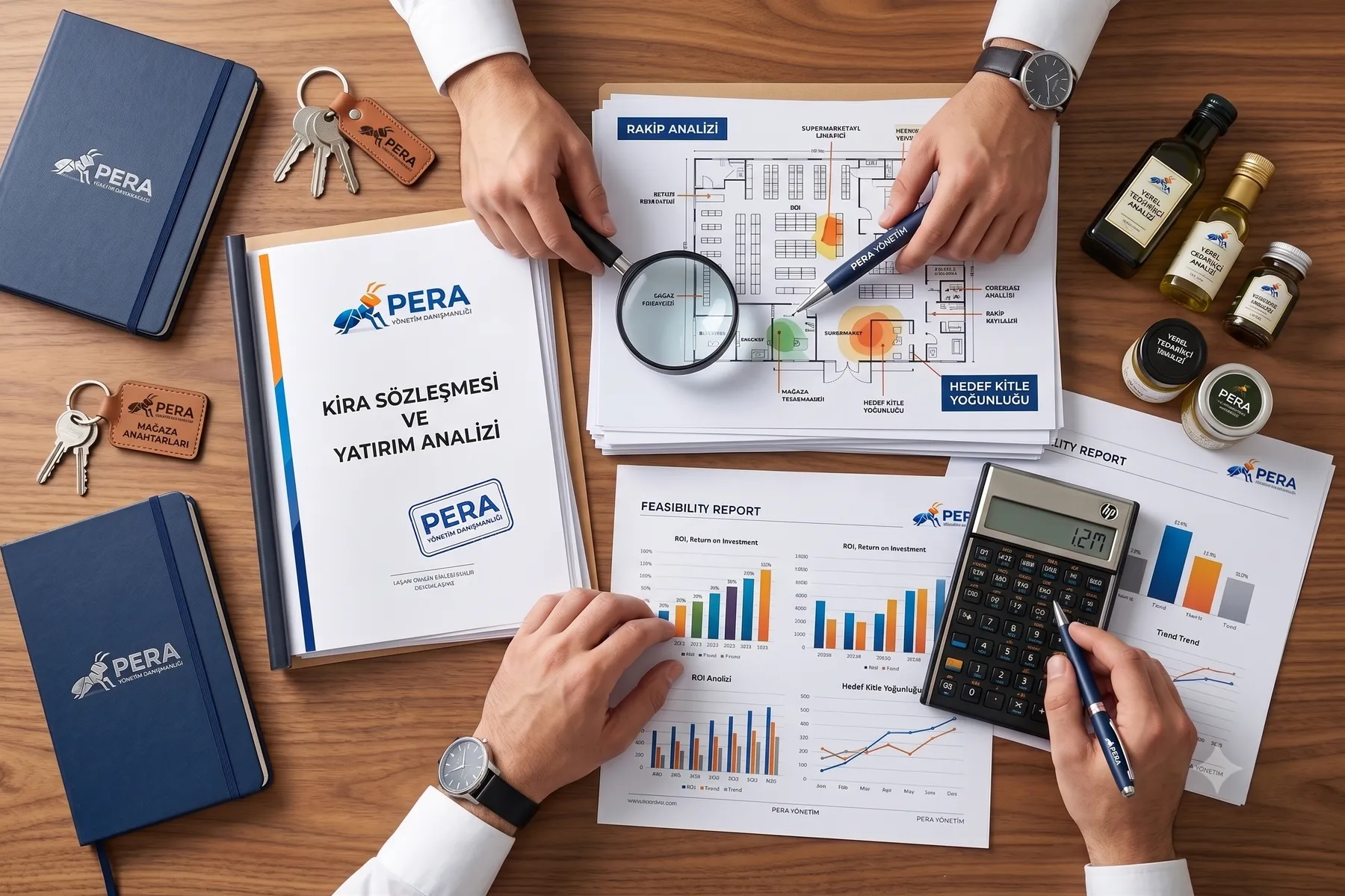
The most expensive mistake in a supermarket investment is the one you notice after opening. A feasibility study is prepared to catch that mistake at the outset: using realistic assumptions, it shows how much the investment will cost, at what turnover the business will become profitable and how long it will take to earn the money back.
1. Location and market analysis
The foundation of the study is the area. You examine the number and income level of surrounding households, the location and price level of competing supermarkets, pedestrian and vehicle traffic, parking and the area's development potential. This data forms the basis on which the turnover forecast rests.
2. Investment amount
Every item to be spent before opening is listed: rent deposit and key money, refurbishment and decoration, shelving and refrigeration equipment, checkout and automation systems, initial stock, licence and permit costs. Setting aside part of the budget as a reserve for unexpected expenses is a sound approach.
3. Operating costs
Monthly fixed and variable costs are calculated separately:
- 1Rent, service charges and insurance
- 2Staff salaries and benefits
- 3Electricity, water and gas — especially the energy consumed by refrigeration
- 4Losses from waste, shrinkage and expiry dates
- 5Software, maintenance and service costs
- 6Marketing and promotion budget
4. Turnover and profitability forecast
The turnover forecast is built on sales per square metre, the number of daily customers and the average basket value. Rather than a single scenario, you should prepare three — optimistic, realistic and pessimistic — and compare the gross margin with costs to find the break-even point.
5. Payback period and decision
At the end of all the calculations, you can see how many months it will take for the investment to pay back. This period is compared with industry averages and the investor's expectations. If the result is negative, the right answer is often not to give up, but to rethink the location, floor area or concept.
Prepare your feasibility study with an expert
As part of its leasing and investment consulting, Pera Yönetim runs the feasibility process with you, from location analysis to the payback calculation, so that your investment decision rests on real data from the field.